Advertisements
Choosing the perfect gaming phone requires prioritizing performance factors that directly impact gameplay. The ideal gaming phone combines a powerful processor, high refresh rate display, ample RAM, and long battery life to ensure smooth and immersive gaming sessions. These elements work together to reduce lag, improve visual quality, and keep the device running efficiently during intense use.
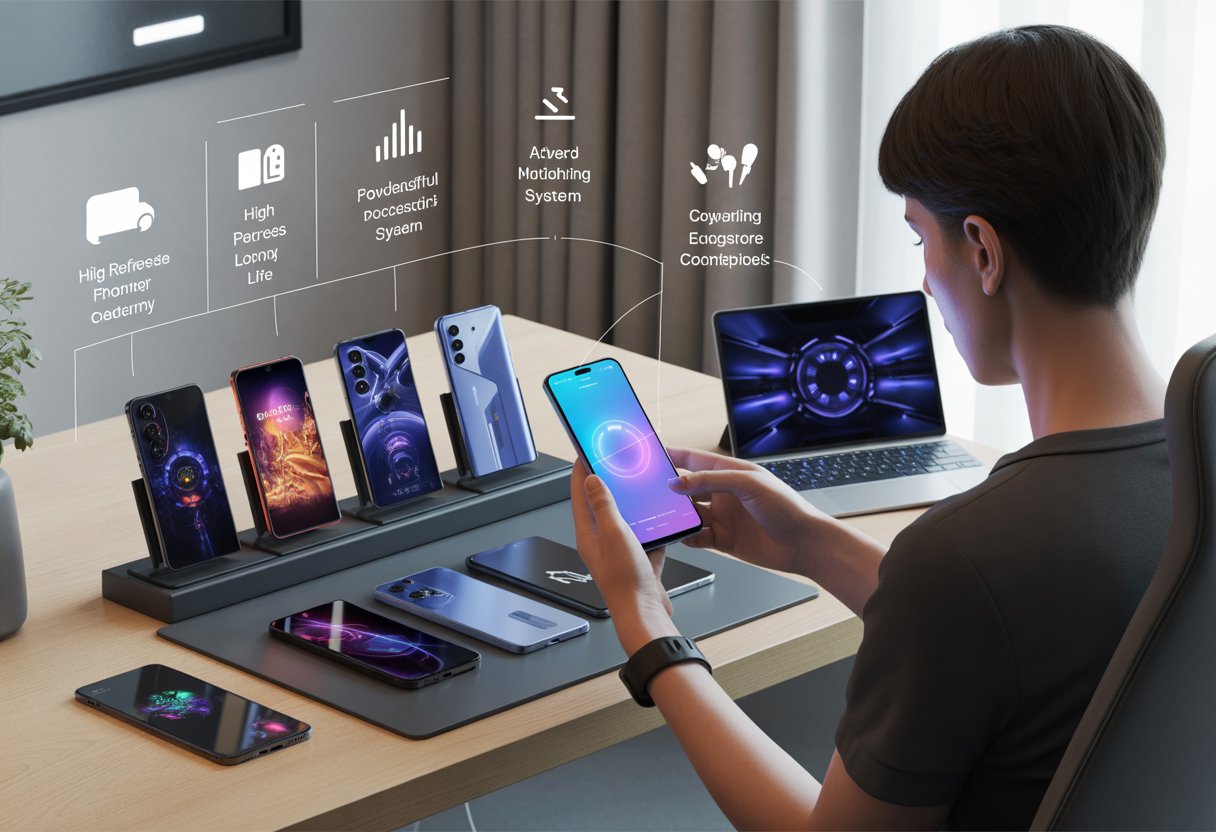
Beyond raw specs, gamers should consider additional features such as specialized cooling systems, customizable controls, and software optimization designed specifically for gaming. The right device enhances not only performance but also comfort and user experience, making it a key tool for serious mobile gamers.
As mobile gaming continues to grow, selecting a phone tailored for gaming needs becomes more essential. Understanding what to look for helps avoid overwhelming options and guarantees a balanced device that meets both gaming demands and everyday use.
Key Features to Look for in a Gaming Phone
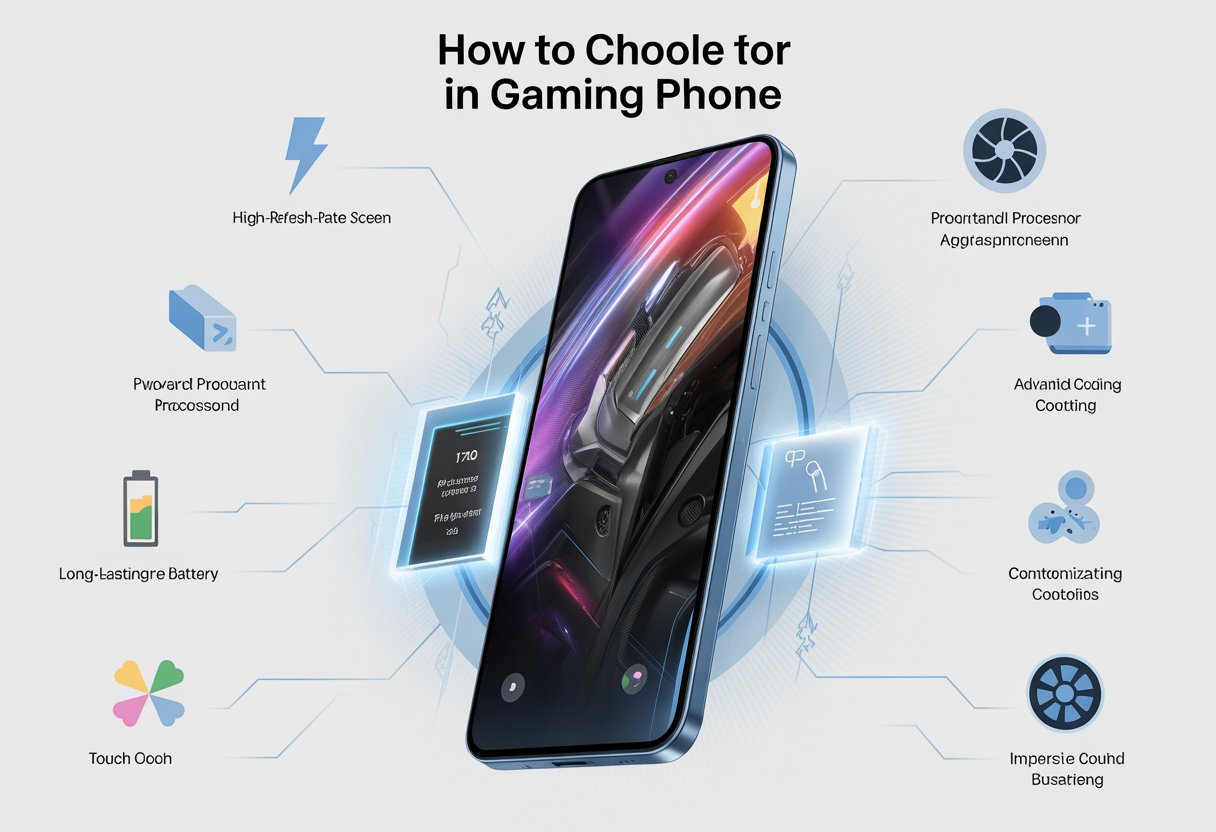
Choosing the right gaming phone depends on multiple hardware and software specifications that impact gameplay fluidity, graphics quality, and overall user experience. Performance components, display quality, memory capacity, and power management are crucial elements to examine carefully.
Processor Performance and GPU
The processor (SoC) drives the phone's performance, directly affecting game load times and frame stability. Modern gaming phones should feature the latest high-end chipsets such as Qualcomm Snapdragon 8 Gen 3 or equivalent. These processors offer optimized CPU and GPU cores designed to handle intensive gaming.
A powerful GPU is essential for rendering graphics smoothly at high settings. Integrated GPUs like the Adreno 740 or Mali-G710 deliver better frame rates and improve visuals without excessive battery drain. A stronger processor-GPU combination reduces lag and maintains consistent game performance during extended sessions.
Display Refresh Rate and Resolution
Common display specifications for gaming phones include at least a 120 Hz refresh rate, with many models pushing to 144 Hz or higher. Higher refresh rates result in smoother animations and more responsive gameplay, which is especially important in fast-paced competitive games.
Resolution is equally important. Most gaming phones offer Full HD+ (1080p) or higher; some reach Quad HD+ (1440p). While higher resolution improves image clarity, it can also increase battery consumption. Many gamers prefer a balance, choosing a high refresh rate with a solid Full HD+ panel to optimize both visuals and power efficiency.
RAM and Storage Options
Gaming phones require ample RAM to support multitasking and avoid dropped frames. A minimum of 8 GB RAM is recommended, with premium models featuring 12 GB to 16 GB RAM to handle resource-intensive games and background apps smoothly.
Storage capacity is another critical aspect. Games can take up upwards of 5 to 10 GB or more per title, so at least 128 GB of internal storage is advisable. Options to expand storage via microSD cards are rare but beneficial for those with large game libraries.
Battery Capacity and Charging Speed
A high-capacity battery ensures longer gaming sessions without frequent interruptions. Most gaming phones come with at least a 4,500 mAh battery, while many reach 5,000 mAh or more for extended playtime.
Charging speed matters, too. Fast charging technologies delivering 30W to 65W or higher help minimize downtime. Some gaming phones also include advanced cooling features to prevent overheating while charging and during intensive gaming, preserving performance and battery health.
Gaming Optimization and Thermal Management
Effective gaming phones rely on strong cooling solutions, tailored software modes, and precise control features to maintain performance and comfort during extended play. Each element plays a critical role in preventing lag, overheating, and input lag, which are essential for a smooth gaming experience.
Cooling Systems and Heat Dissipation
A proper cooling system prevents overheating and helps maintain consistent performance. Modern gaming phones often include vapor chambers or graphite sheets to spread heat evenly. Some use liquid cooling or even built-in fans, although the latter is less common.
Thermal management also depends on software optimization that throttles performance to avoid damage. Removing cases during gaming and ensuring sufficient airflow around the device can further improve heat dissipation. Phones with advanced cooling maintain higher frame rates and avoid throttling even in long sessions.
Custom Gaming Modes
Custom gaming modes optimize resources and prioritize gaming traffic. These modes typically block notifications, limit background processes, and boost CPU/GPU performance. Some include settings to fine-tune graphics quality and frame rates for a balance between visual fidelity and battery life.
They also monitor temperature and adjust power settings dynamically. This avoids sudden slowdowns and helps extend battery life without sacrificing performance. Users benefit from game-specific profiles that remember settings for different titles.
Haptic Feedback and Controls
Enhanced haptic feedback improves immersion by delivering precise vibrations linked to in-game actions. Gaming phones may offer customizable vibration intensity and patterns, adding tactile response that matches gameplay events.
Physical controls, like shoulder buttons or touch sensitivity adjustments, provide more accurate input compared to standard touchscreen gestures. Some phones support external gaming accessories or have built-in triggers, enhancing reaction times and overall control for competitive players.
Software and Ecosystem
Choosing the right gaming phone depends heavily on how the software supports gaming performance and device longevity. Optimizations for specific games, timely system updates, and broad compatibility with game libraries shape the overall experience.
Game-Specific Enhancements
Many gaming phones include software features tailored to improve gameplay. These may involve dedicated gaming modes that optimize CPU and GPU usage, reduce background app interference, and control notifications for uninterrupted sessions. Some devices offer customizable controls or macros to give players an edge.
Game-specific enhancements often extend to advanced touch response settings, like increased touch sampling rates and haptic feedback. These improvements make touch input more precise, especially in fast-paced games. Additionally, integrated game launchers might provide performance monitoring tools and quick access to game libraries for convenience.
Update Frequency and Support
Regular software updates are critical to maintaining peak gaming performance over time. Updates can improve stability, fix bugs, and add compatibility for new game titles. Phones from manufacturers with a strong track record of long-term support will typically deliver a better gaming experience through consistent software improvements.
Security patches and OS upgrades also impact the device's overall health and compatibility with evolving game requirements. Users should consider brands known for timely updates, as delayed or infrequent updates can lead to performance issues and incompatibility with future game versions.
Compatibility With Game Libraries
Access to a broad and diverse game library directly influences a gaming phone's versatility. Compatibility with major platforms like Google Play Games and Apple Arcade ensures a wide selection of titles. Some phones support exclusive games or offer early access, which can be a significant advantage.
Cross-platform compatibility matters for users who play on multiple devices or use cloud gaming services. Ensuring the phone supports services like Xbox Cloud Gaming or NVIDIA GeForce Now expands gaming options beyond native apps. Checking for supported game stores and streaming platforms is essential when selecting a gaming phone.
Budget, Brand, and Future-Proofing
Choosing the right gaming phone involves balancing cost, manufacturer reliability, and how well the device will hold up over time. These factors greatly affect user satisfaction and investment value.
Price-to-Performance Ratio
Evaluating the price-to-performance ratio helps identify gaming phones that deliver the best hardware capabilities within budget constraints. A phone with a powerful processor, sufficient RAM (at least 8GB), and a high-refresh-rate display, paired with a reasonable price, offers good value.
Mid-range phones with Snapdragon 7-series or equivalent chips often outperform older flagship models yet cost less. Gaming optimization features like advanced cooling and software enhancements also add value without drastically increasing price.
Focusing solely on specs without considering real-world performance can lead to overspending on features that don't improve actual gaming. Checking benchmarks and reviews ensures the phone meets gaming demands efficiently.
Reputable Brands and Support
Purchasing from established brands guarantees access to quality hardware and consistent software updates. Brands like Apple, Samsung, ASUS, and Xiaomi typically provide reliable build quality and timely security patches.
Support extends beyond the initial purchase. Warranty services, customer care responsiveness, and software longevity impact the overall experience. Gaming phones from reputable brands tend to receive OS updates longer, maintaining performance and security over several years.
Choosing brands with proven histories of supporting gaming devices ensures stability and fewer hardware issues. It also increases the likelihood of future compatible accessories and peripherals.
Longevity and Resale Value
A gaming phone's longevity depends on hardware headroom for running current and future games smoothly. Models with newer chipsets, larger batteries, and efficient cooling systems remain relevant longer.
Maintenance and upgrade paths, such as expandable storage, can extend usability. Phones that receive regular software updates stay optimized for new game releases and security standards.
Resale value is tied to brand reputation, condition, and demand for the model. Well-supported phones from major manufacturers usually retain higher resale prices, helping owners recover part of their investment if upgrading is needed.
Key factors for longevity:
- Latest GPU and CPU architecture
- 120Hz+ displays for smooth visuals
- Solid battery life with fast charging
- Reliable software support schedule